(How to remain human)
When a shared reality begins to fall apart, it does not affect only our thinking.
The body reacts as well.
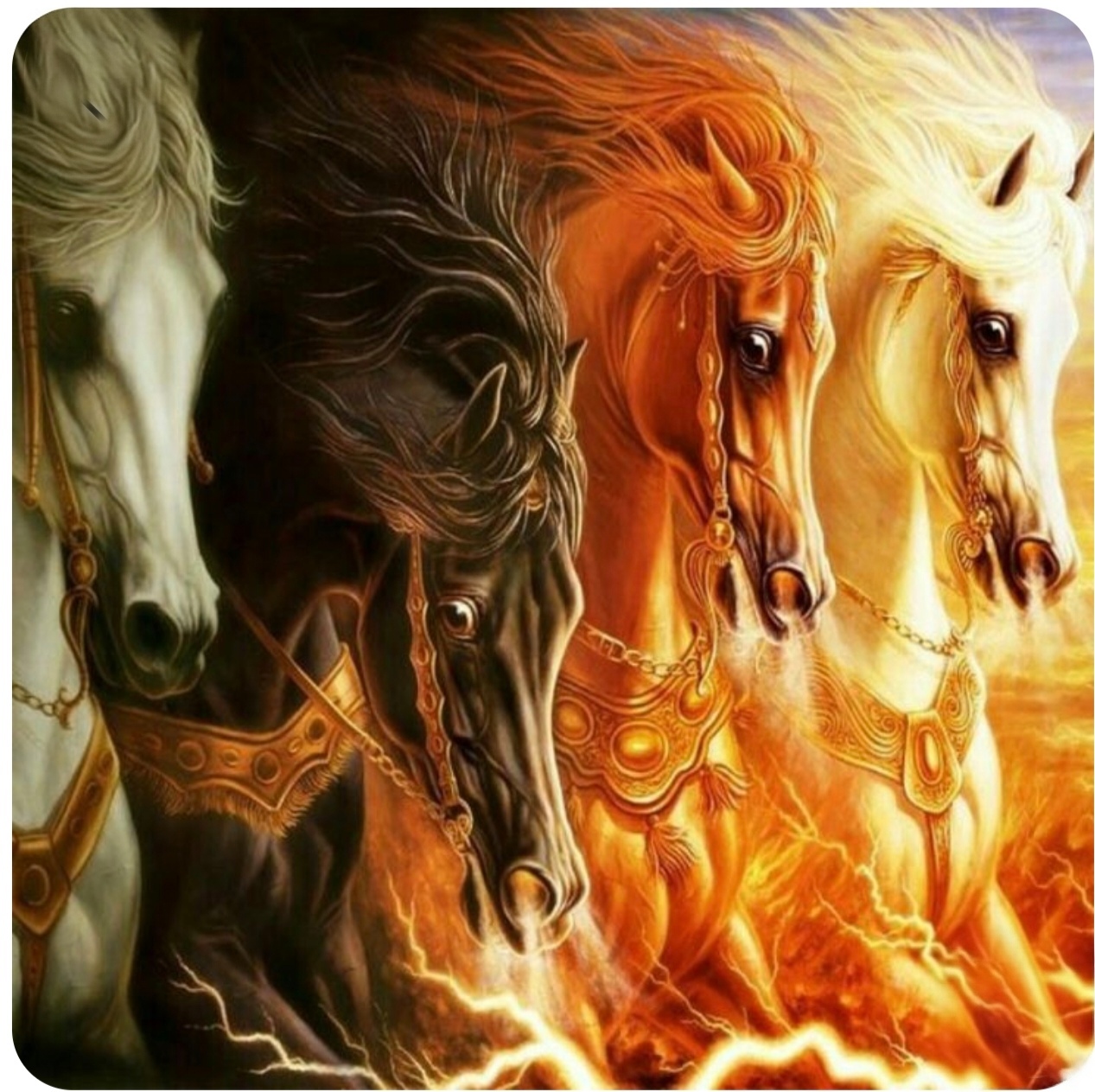
In the Book of Revelation, after the seals are opened, what follows is not theories, but the four horsemen.
Most people imagine the four horsemen as a future catastrophe.
Something that will happen one day, one after the other.
Yet the description does not speak about them this way.
They do not arrive in sequence.
They appear at the same time.
Often as an atmosphere.
Or something we feel in our own bodies.
War — even if it is far away, it is present in the news and in our nervous systems.
Economic pressure and inflation — when people are unsure what their income will still be enough for.
Fear of diseases — news, rumors, pharmaceutical advertisements.
And something characteristic of our time: a collective exhaustion.
There is no need for an apocalyptic movie.
It is enough to look at people’s nervous systems.
The impatience.
The anger that ignites faster than before. The overload.
The fatigue that does not come from lack of sleep, but from living with too much uncertainty.
The Book of Revelation does not list future events as much as it describes the psychological state of an era.
The inner tension that runs through everyday life.
You can see it in people’s eyes.
In arguments that erupt over small matters.
In the silence that settles between us.
At times like these, it is easy to drift toward the loudest directions.
Toward sudden judgments.
Toward simple stories where there is always an enemy and a hero.
Tension loves extremes.
Noise. Shouting. Displays of power.
Quick reactions.
Yet most eras remain human not because of heroes, but because of those who, even within tension, are able to think, to pay attention, and not lose themselves — or each other.
When everything pours down on us at once,
what we need is not heroes, but human beings.
Ildikó Dajbukát
Spirit Touch Healing
Photo: Pinterest
spiritenergy.hu